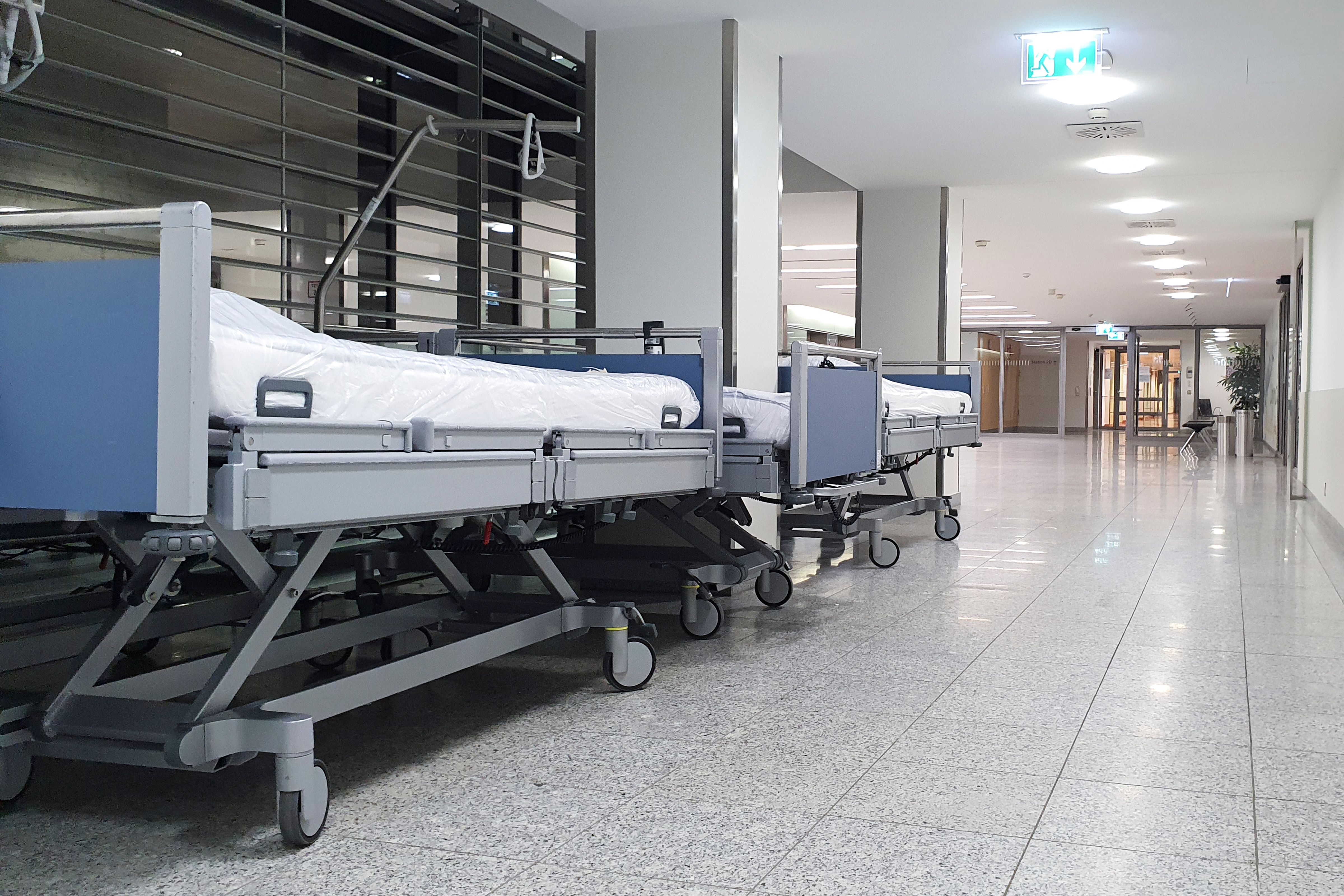
Hospital capacity discussions often start with beds.
- How many beds are available?
- How many are occupied?
- How many admissions are waiting?
Those are necessary questions, but they do not explain one of the most difficult capacity problems inside a hospital: beds that are technically occupied but no longer required for the intensity of care being delivered.
That is where length of stay becomes more than a clinical metric.
A patient can remain in a bed because a discharge order has not been completed. Another patient may be medically ready but waiting for transportation. Someone else may be waiting for a post acute placement.
A medication, consultation, imaging result or home support arrangement can become the final dependency keeping a discharge from moving forward.
These events are often recorded across different systems.
The result is a familiar reporting problem. The hospital can see the length of stay, but not necessarily the operational sequence that produced it.
That is the gap length of stay analytics can address.
Length of Stay Is an Outcome. The Delay Behind It Is the Signal.
A total LOS figure compresses an entire admission into one number.
That makes it useful for benchmarking but weak for root cause analysis.
The more useful question is what happened between clinical readiness and physical discharge.
That requires looking at the timeline.
- Admission
- Clinical treatment
- Discharge planning
- Medical readiness
- Orders
- Case management
- Placement
- Transportation
- Physical departure
Each stage can generate a different type of delay.
When these events are connected, hospitals can start separating clinical length of stay from operational delay.
Why the discharge clock needs more detail
A discharge timestamp tells you when the patient left.
It does not necessarily tell you why the patient stayed.
That distinction is critical for healthcare data analytics.
A patient waiting for a skilled nursing facility is not facing the same operational constraint as a patient waiting for a physician assessment. A patient waiting for transportation presents a different problem from one waiting for home equipment.
Treating all of these cases as "long LOS" hides the actionable information.
Discharge Delays Are Also Capacity Events
A delayed discharge does more than increase the patient's stay.
It can affect the next admission that needs the same bed.
Recent research illustrates why post acute capacity matters. A 2026 JAMA Network Open study examined 3.34 million Medicare fees for service hospitalizations and found that lower nurse staffing levels in skilled nursing facilities were associated with longer hospital stays within hospital skilled nursing facility markets.
JAMA Network Open study on skilled nursing facility capacity and hospital length of stay
That finding matters for analytics because discharge is not always controlled entirely inside the hospital.
A hospital may improve its internal workflow while still facing constraints in the next destination of care.
This is why business intelligence for healthcare needs to extend beyond a single department when the operational question crosses organizational boundaries.
The Most Useful LOS Analysis Starts With the Discharge Timeline
A useful analytical model does not stop at average LOS.
It breaks the stay into meaningful stages.
Clinical readiness versus operational readiness
These two conditions are not interchangeable.
A patient can be clinically ready for discharge while remaining operationally unable to leave.
Analytics should therefore identify the gap between those states.
The hospital can then ask:
- When was the patient clinically ready?
- When was the discharge order placed?
- What dependency remained?
- Which team owned that dependency?
- When was it resolved?
- When did the patient physically leave?
That creates a far more useful picture than a monthly LOS average.
What Hospitals Can Learn From Discharge Delay Patterns
Once discharge events are structured, several patterns become measurable.
A hospital may identify delays associated with specific discharge destinations.
Another may find that certain services have recurring timing gaps between clinical readiness and discharge order entry.
A different service may have relatively stable clinical LOS but considerable variation in the time between order completion and physical departure.
These are different problems.
They should not be placed under one LOS category.
This is where descriptive analytics becomes useful
Descriptive analytics in healthcare is valuable when the data is organized around operational events rather than simply summarized at department level.
The goal is not to produce another LOS chart.
The goal is to explain the composition of the LOS.
That distinction changes what leaders can do with the information.
Real Time Discharge Intelligence Can Change the Question
Traditional LOS reports are retrospective.
They are useful for reviewing performance after the fact.
A more responsive system can identify patients approaching a discharge dependency before the expected discharge window passes.
This is where real time data analytics becomes relevant.
A discharge command view could surface:
- Patient readiness
- Outstanding dependency
- Expected resolution time
- Responsible workflow
- Destination requirement
- Current delay duration
The point is not to create another notification system.
It is to give care coordination teams a shared operational picture.
Capacity Analytics Should Follow the Bottleneck
A common analytics mistake is measuring the final result without measuring the process that created it.
For discharge, the final result is LOS.
The process contains the real operational signals.
That makes hospital capacity analytics much more useful when it connects bed status with discharge readiness, case management activity, post acute placement and transport information.
A bed is not simply occupied or available
For operational planning, there are more meaningful states.
A bed may be occupied by an actively treated patient.
It may be occupied by a clinically ready patient awaiting discharge.
It may be reserved for a specific admission.
It may be physically available but not ready for the next patient.
Each state has different implications.
A dashboard that collapses them into "occupied" and "available" loses important capacity information.
Building a Better Discharge Analytics Layer
The data model should connect the patient journey rather than simply combine reports.
Useful inputs can include:
- EHR clinical events
- Discharge orders
- Case management activity
- Placement status
- Post acute destination
- Transportation records
- Bed management information
- Pharmacy dependencies
- Therapy assessments
The exact data sources depend on the hospital environment.
What matters is linking the events so the organization can see the sequence.
This is where business intelligence tools can become more than reporting interfaces. With the right underlying data model, dashboards can show where discharge activity is accumulating instead of simply displaying an average LOS.
What Should Hospital Leaders Actually Measure?
The most useful metrics are not necessarily the most familiar ones.
Consider measuring:
- Time from clinical readiness to order
- Time from order to physical departure
- Delay by discharge dependency
- Delay by service
- Delay by destination
- Patients approaching expected discharge
- Patients exceeding expected operational milestones
These measures provide context around LOS.
They also make accountability clearer because each delay can be connected to the workflow that produced it.
Why "Discharge Before Noon" Alone Is Not Enough
Timing targets can be useful, but they can also produce misleading conclusions when viewed without context.
A 2024 study evaluating a discharge before noon initiative at a large tertiary hospital found that the percentage of patients discharged before noon increased from 5.0% to 11.4%, while the study found no independent association between the initiative and overall LOS. 2024 study of a discharge before noon initiative in a tertiary hospital
That is an important analytics lesson.
A single target can improve one visible metric without resolving the underlying flow problem.
Hospitals need to understand why a patient is still in the bed.
That is where root cause analysis becomes more valuable than target chasing.
Frequently Asked Questions
What is length of stay analytics?
Length of stay analytics examines patient stay patterns together with the operational events that influence admission duration, including discharge readiness, dependencies, placement and departure timing.
How can hospitals identify discharge bottlenecks?
Hospitals can connect clinical readiness with discharge orders, case management activity, placement, transportation and physical departure data. This allows teams to see where time accumulates.
Can LOS analytics identify capacity that is already available?
It can identify beds occupied by patients whose care needs have changed, including cases where discharge is delayed by operational dependencies. The actual capacity impact depends on the hospital's workflow and data quality.
How does Ascend Analytics approach hospital capacity data?
Ascend Analytics can connect data from multiple healthcare systems so operational leaders can examine patient flow, discharge activity and capacity through a more connected analytical view.
Is reducing LOS always the right objective?
Not necessarily. LOS should be interpreted alongside clinical appropriateness, readmissions, patient safety and discharge readiness. The objective is understanding unnecessary delay rather than simply making every stay shorter.
How Much Hospital Capacity Is Sitting Inside the Discharge Process?
Hospitals do not need another average LOS number to tell them that capacity matters. They need to understand what is keeping individual beds occupied after the clinical work has reached the point where discharge can move forward.
Ascend Analytics helps healthcare organizations connect operational data so leaders can move from seeing delayed discharges to understanding the specific workflow behind them. When discharge becomes measurable as a process rather than a timestamp, capacity analysis becomes considerably more useful.
Book a demo with us to see how connected operational data can help identify discharge delays, uncover workflow bottlenecks, and reveal capacity that may already exist within your hospital.