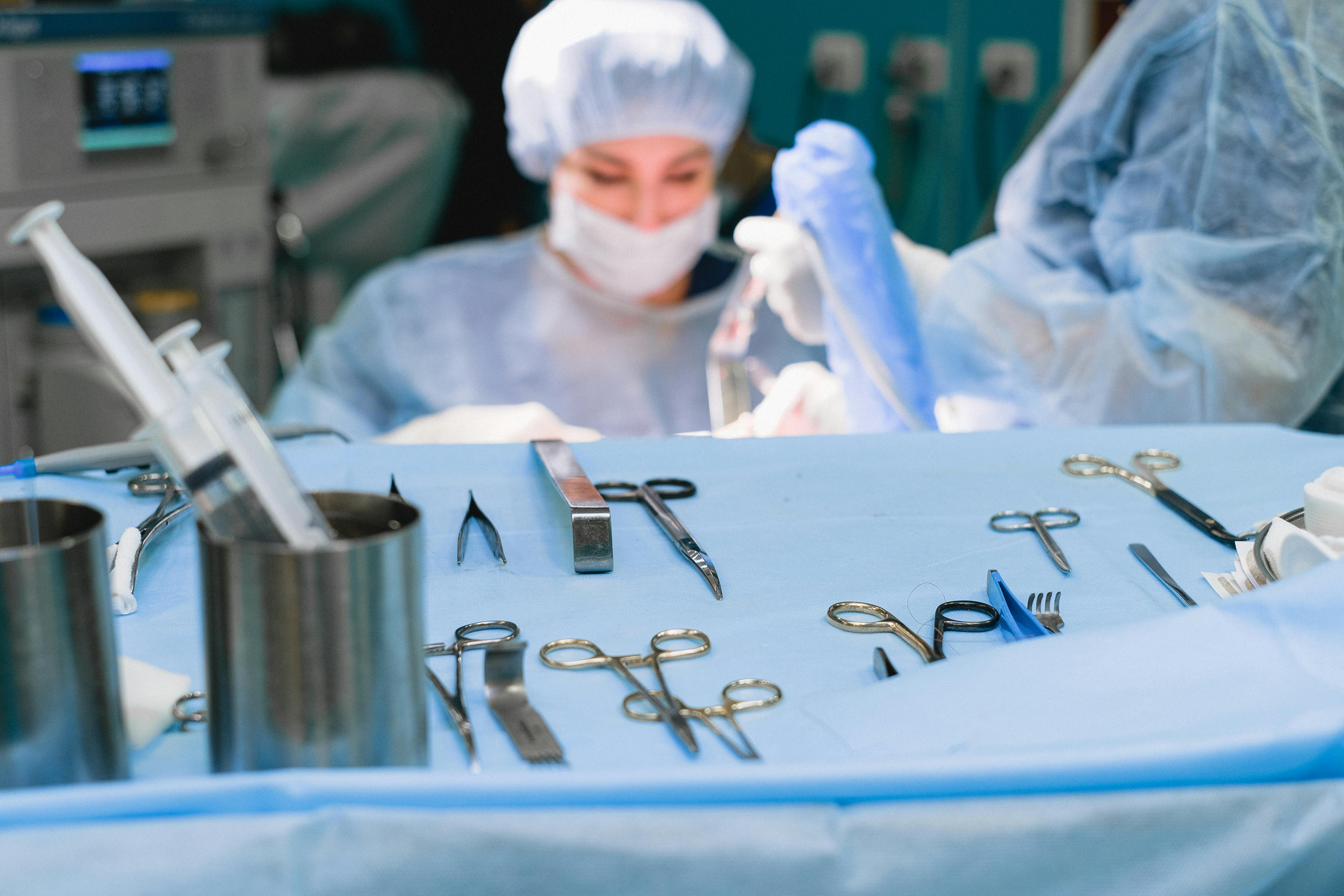
There is a conversation that plays out in surgical programs across the country with remarkable consistency. Surgeons say they cannot get block time. OR directors say the rooms are full. And yet, when the data is actually examined, block utilization rates are sitting at 60 to 70%, turnover times are running 12 to 15 minutes above benchmark, and the same service lines are chronically over-allocated while high-growth specialties carry waitlists they cannot clear. The capacity crisis is real. But in most cases, it is not a room problem. It is a data problem.
The operating room remains one of the most financially consequential and analytically underleveraged environments in the hospital. Surgical services generate the majority of hospital margin, and every hour of unused OR time represents not just lost revenue but deferred patient care. Block lengths are frequently not optimized to make the best use of OR time, block rules are not aligned with the OR's operational and financial priorities, and the result is low utilization, wasted capacity, and underperforming department revenue.
OR utilization analytics changes the terms of this conversation. Instead of debating block allocation based on seniority, relationships, or historical precedent, it surfaces what the data shows: which blocks are being used, which are sitting idle, which specialties are running over benchmark, and exactly what the financial cost of each inefficiency is in recoverable annual revenue.
How Most Facilities Measure OR Utilization Wrong
The standard metric most surgical programs use to evaluate OR performance is total room utilization: the percentage of scheduled block hours during which a room is actually occupied. On the surface this seems like a reasonable measure. In practice, it masks the specific inefficiencies that are costing the facility real money.
Total utilization rates aggregate across all rooms, all blocks, and all service lines. A facility with an 82% utilization rate looks well-performing on paper. But that aggregate hides the OR that runs at 55% because a surgeon's block is perpetually underused, the morning session that consistently runs over while the afternoon blocks sits half-empty, and the specialty that is generating a 28-case waitlist because another service line holds blocks it uses at 60%.
Surgical scheduling analytics applied at the block level, the surgeon level, and the specialty level tells a different story. It surfaces utilization by the specific unit of allocation and connects that utilization rate to financial outcomes, demand signals, and correctable scheduling variables.
The Block Utilization Calculation That Actually Matters
Raw block utilization measures allocated hours against hours in which cases ran. But a more operationally useful calculation is primetime utilization: the proportion of allocated block hours during which a case was actively running during the facility's defined core hours, adjusted for turnover time and cases released within the cancellation window. This calculation reveals not just whether a block was used, but whether it was used efficiently and whether unused time was released early enough for other surgeons to fill it.
When operating room capacity analytics is applied at this level of granularity, the specific levers available for intervention become clear. A block that is 80% utilized in raw terms but only 62% utilized in primetime reveals that a significant portion of the scheduled time is being consumed by extended turnover, late first-case starts, or cases that finish early without releasing the remaining time for reallocation.
Block Time Release Analytics: Detecting and Recovering Idle Time
Block time that goes unused without being released into the open scheduling pool is among the most directly recoverable sources of surgical revenue loss. When a surgeon's cases finish two hours before the block ends and no mechanism exists to surface that available time to other surgeons with pending cases, those two hours simply disappear. At OR rates of $30 to $100 per minute, that is not a rounding error.
Block time optimization requires two analytical capabilities working together. The first is a release detection system that monitors block utilization in real time and flags time that is available for reallocation based on remaining case schedule, surgeon case duration history, and confirmed cancellations. The second is a matching system that connects available block time to pending cases from the waitlist, factoring in surgeon availability, equipment requirements, case duration estimates, and patient readiness status.
The financial impact of systematic block release analytics is significant. When facilities identify and recover even a fraction of idle block time across a surgical week, the aggregate annual revenue opportunity frequently runs into seven figures. For a program already straining under waitlist pressure from high-demand specialties, that recovered time is both a financial and a patient access win.
Turnover Time Modeling: Where 8 Minutes of Avoidable Delay Costs You Six Figures
Turnover time is one of the most studied and least consistently managed variables in perioperative performance. Most surgical programs know their average turnover time. Very few have modeled what specific sources of above-benchmark turnover are costing them annually, at the room level and across the surgical week.
The industry benchmark for intraoperative turnover is approximately 25 to 28 minutes depending on procedure type and specialty mix. When rooms are running at 38 to 42 minutes, that gap is not simply an operational issue—it becomes a schedule compression force that pushes cases later into the day, increases end-of-list cancellation risk, and reduces the number of cases a facility can reliably schedule.
Perioperative data analytics applied to turnover time data attributes delay to specific causes at the room and block level: cleaning process sequencing, equipment setup timing, anesthesia team arrival, surgeon readiness, and staffing coordination gaps. When those drivers are visible at the room and shift level, interventions become precise rather than generic, which is where advanced AI and ML driven analytics capabilities help surface patterns across OR workflows through predictive and root-cause modeling.
The compounding effect of above-benchmark turnover is what makes it a priority financial issue. Eight minutes of avoidable delay per turnover, across four turnovers per day, across four ORs, five days a week, accumulates to 640 minutes of lost OR time per week. At even conservative OR revenue rates, that figure translates to hundreds of thousands of dollars in annual lost surgical capacity, before accounting for the downstream effect on case cancellation rates.
The same compounding logic applies to other hidden cost centers across the revenue cycle. See how prior authorization quietly drains millions from health systems and how to measure it →
Robotic Surgery Asset Utilization: The Special Case of Expensive Shared Equipment
The rise of robotic surgical platforms has introduced a distinct utilization analytics challenge that most surgical scheduling analytics frameworks have not yet fully addressed. Robotic systems represent capital investments of $1 million to $2.5 million or more, with additional per-procedure consumable costs. Their utilization directly affects the financial justification for the investment and the scheduling capacity of the OR in which they operate.
Robotic asset utilization analytics tracks system uptime against scheduled case time, measures actual case duration against predicted duration by surgeon and procedure type, and surfaces cases where the robotic system is reserved but not deployed or where scheduling inefficiencies are creating idle time on equipment that could be in use. When multiple surgeons compete for access to a single robotic platform, the allocation logic that governs scheduling decisions has direct financial consequences that deserve the same analytical rigor as block scheduling.
Operating room capacity analytics that includes robotic asset modeling can identify whether a second robotic system is financially justified based on current demand patterns and utilization gaps, which case types are most efficiently matched to robotic scheduling, and where surgeon-level variation in case duration is creating predictable bottlenecks in the robotic schedule.
Frequently Asked Questions
What is OR utilization analytics and why do most hospitals underuse it?
OR utilization analytics uses surgical scheduling, turnover, and block usage data to identify inefficiencies that reduce OR capacity and revenue. Most hospitals underuse it because perioperative data is fragmented across EHRs, scheduling, and anesthesia systems.
How does block time release analytics work in practice?
The system monitors live OR schedules, predicts case durations, and identifies blocks likely to finish early. It then matches unused time with pending surgical cases based on surgeon availability, equipment compatibility, and timing fit to reduce wasted OR capacity.
What is a realistic annual revenue recovery opportunity from OR utilization analytics?
For mid-size surgical facilities with underutilized ORs and inefficient turnover times, revenue recovery often ranges from $1.5M to $6M+ annually. The exact opportunity depends on utilization rates, block efficiency, and surgical demand patterns.
How does surgical scheduling analytics handle surgeon relationship dynamics around block reallocation?
Analytics does not decide block reallocation but provides transparent utilization and demand data to support evidence-based discussions. This shifts conversations from subjective negotiations to objective performance metrics.
Can OR utilization analytics integrate with existing perioperative and scheduling systems?
Yes. The analytics layer integrates with existing EHRs, scheduling platforms, and anesthesia systems rather than replacing them. The unified dashboard gives operational leaders centralized visibility across all perioperative data sources.
Your OR Schedule Has a Capacity Story It Has Not Been Able to Tell Yet. Are You Ready to Hear It?
The surgical revenue your facility is leaving on the table is not invisible. It is in the idle block hours, the above-benchmark turnovers, the unmatched waitlist cases, and the misaligned block allocations that no one has had the analytical layer to surface and quantify. The capacity is there. The question is whether you have the data infrastructure to find it and act on it before the week closes.
The team at Ascend Analytics can show you exactly what your OR data reveals about recoverable capacity. Schedule a call with us to begin the conversation.